Invention of Television
There were numerous inventors that contributed to the invention of television.
Among these inventors were two individuals widely regarded as having made significant contributions - Vladimir Zworykin and Philo Farnsworth.
 Vladimir Zworykin initially worked for Westinghouse but later joined RCA. He filed two patents in 1923 for a television system.
Philo Farnsworth formed a partnership with private investors as Television Laboratories.
He produced the first working prototype of a television in 1928 using a different technology than Zworykin.
Takeover Bid
Farnsworth started working on his invention when he was only 14 years of age and his invention was considered the better of the two television technologies.
RCA offered to purchase and finance the development of his invention if Farnsworth would come work for them. Farnsworth rejected this proposal.
The invention of television is a great example of the struggles independent inventors can experience.
At the time, RCA dominated the radio industry because it controlled all the patents and earned millions of dollars in licensing the technology to manufacturers.
They realized the potential for television and envisioned dominating that industry by controlling the patents and earning revenues from licensing - the same way they did with radio.
In order to fulfill this strategy they needed to get control of the technology being developed by Farnsworth.
The investors with Farnsworth struggled with their financial resources yet they were able to file fifty patents related to their television invention.
Some investors wanted to sell to RCA while others felt they should not. Attracting new investors and dealing with his partners was an ongoing challenge for Farnsworth.
Strategy
RCA decided to take an aggressive strategy against Farnsworth. They filed lawsuits against him attacking the validity of his patents by claiming that Zworykin was responsible for the invention of television.
This strategy had a two-fold purpose. It would force Farnsworth to incur expensive legal costs and it would inhibit his ability to secure any licensing arrangements or financing, since the validity of his patents was being challenged.
In other words, it would force Farnsworth to sell his invention to RCA or go bankrupt.
Although this strategy seems quite unreasonable it is common for companies to seek a strong competitive position within an industry or to dominant an industry.
Acquisitions, mergers and numerous takeover tactics are used to fulfill this objective. These strategies exist today in various industries.
Inventor Wins
Farnsworth was able to withstand the takeover by RCA. He managed to arrange a licensing agreement in England with the BBC.
This helped to keep his company operating.
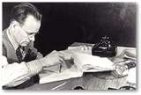
He was also successful in defending his patent rights, however RCA kept the pressure on by appealing the court decision. Farnsworth was then approached by AT&T with a proposal. AT&T had a patent for "coaxial" cable which was ideal for the transmission of television signals.
AT&T proposed what is known as a "cross-licensing" arrangement. Farnsworth would exclusively license AT&T to transmit television signals and AT&T would exclusively license Farnsworth as the sole user of "coaxial" cable for television.
This is also know as a "trust" whereby parties mutually agree to only do business with each other and not anyone else. It also eliminates competition and such agreements are now regulated by governments through "anti-trust" legislation.
The agreement between Farnsworth and AT&T forced RCA into a licensing arrangement. CBS agreed to a licensing arrangement for broadcasting. Philco, Zenith, Emerson and DuMont would eventually follow.
The invention of television was officially introduced to the public at the 1939 World's Fair in New York.





 



|

|
| Apple's floating holographic images. Is this the future of television? |

|
| Giant screen smartphones that look like televisions. |